On October 2, the Tuba City Regional Health Care Corporation opened the Echo Cliffs Health Center in Coppermine, Arizona — 123,000 square feet, $170 million, two decades in the making. On October 20 — today — the Indian Health Service is holding a formal listening session at the NCAI 83rd Annual Convention in Palm Springs to brief tribal leaders on the Health Care Facilities Construction Priority System, walk through the remaining projects on the IHS Facilities Construction Priority List, and discuss how Congress actually funds construction.
Those two events are connected. The session today maps the upstream queue. Echo Cliffs is proof of what comes out the other end.
For investment groups tracking Navajo Nation healthcare infrastructure, understanding how projects move through that queue and where they stall is the foundational analysis that precedes any capital positioning.
The Priority List Is the Gating Mechanism
The IHS Facilities Construction Priority List is the federal ordering system that determines which inpatient and outpatient health care facilities get built. Section 301 of the Indian Health Care Improvement Act requires IHS to report to Congress annually on the 10 highest-priority inpatient and 10 highest-priority outpatient projects. That report translates into construction appropriations.
The math is punishing. Congress appropriates roughly $200 million per year toward a backlog IHS estimates at $8 billion. At that pace, without supplemental funding mechanisms or tribal self-financing, clearing the 1993 priority list takes another 40 years. The $1.86 billion NEF commitment Secretary Kennedy notified Congress of earlier this month applies pressure on that math — but it doesn’t dissolve the queue.
What the IHS session at NCAI does today is create a public forum for tribal leaders to surface which projects are stalling, which are advancing, and what alternative pathways Joint Venture Construction Program agreements, PL 93-638 compacts, self-governance compacts can accelerate timelines for facilities that cannot wait for the federal queue.
That conversation has direct consequences for where investment groups find entry points.
Sage Memorial’s Numbers Are the Investment Thesis, Not Just a Health Story
Sage Memorial Hospital in Ganado opened its new $177 million facility in December 2024. What has happened since is the performance case that tribal healthcare infrastructure investment is built on.
Between July 2025 and July 2026, total visits rose 22 percent — from 51,023 to 62,446. Behavioral health visits rose 51 percent over the same period. Average daily inpatient census moved from near zero to 11.2 patients. On some days the facility is at capacity, transferring patients because every bed is full.
A 16-bed hospital running at capacity, adding surgical services, podiatry, telehealth specialty care, tele-ICU, and swing beds in less than two years of operation. That trajectory is what facilities deliver when a tribal community has physical access to care at scale for the first time. It is not anomalous. It is the documented pattern.
Sage also runs the only inpatient dialysis unit on the Navajo Nation. Approximately 1,372 of its patients are 70 or older. With one nursing home serving the entire Nation, elders are routinely sent hours away to Winslow, Show Low, or Phoenix — away from family, language, and familiar care. Sage is launching an elder day program, As’ah Dilzin, in January 2027, with respite care and skilled nursing as the stated long-term goal. Medicare does not cover adult day or respite care. Sage is funding it from operating revenues because the population need is documented and not going away.
That is the long-term care gap on the Navajo Nation. It is measurable, it is building, and it has no near-term federal solution on the current priority list.
What TCRHCC Discussed With IHS at Echo Cliffs, and Why That Matters
Echo Cliffs opened as the first major construction project in the former Bennett Freeze zone — a federal development ban on 1.5 million acres of Western Navajo that ran for 43 years until 2009. Families in Coppermine previously drove roughly 35 miles to Tuba City for services, or relied on a part-time mobile clinic that had run since 2018. The new center is expected to serve approximately 6,000 people.
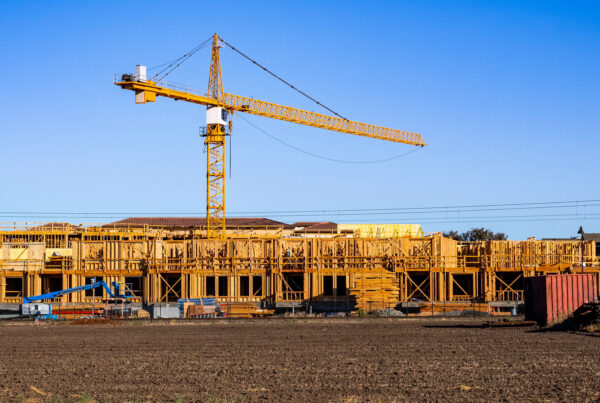
A separate $87 million IHS-funded staff housing project with 92 units is under construction adjacent to the facility, with completion expected by end of 2026. Those units — 60 apartments and 32 single-family homes — are the workforce retention infrastructure that makes a remote facility clinically viable long-term. Without on-site housing, recruitment economics in a post-Bennett-Freeze community do not work.
In Tribal delegation meetings held during the Echo Cliffs opening, IHS Chief of Staff Clayton Fulton and TCRHCC leadership discussed next priorities: a replacement hospital for the aging 1975 Tuba City facility, campus modernization, expanded specialty and long-term care, and housing. TCRHCC has operated as a 638 corporation since 2002. It runs the only Level III trauma center serving Native people outside Anchorage. This is an organization with demonstrated institutional capacity to execute complex capital projects at scale.
The GIMC Gamerco campus remains in the planning and design phase. The Navajo Area Health Services Master Plan kicked off in April 2026 on the 570-acre site. That campus is designated to include behavioral health, elder care, detox facilities, and long-term care as core program elements — not ancillary services. Federal planning funds of $60 million are still being sought.
The Session Today Is the Map
What the IHS listening session at NCAI illuminates today is which projects have viable near-term federal pathways and which are effectively dependent on tribal capital, private partnerships, and alternative financing structures to move within the next funding cycle. IHS has said the session will review remaining projects on the priority list and explain how Congress funds construction — and then open discussion on strategies to advance and complete them.
That discussion is where investment entry points are defined. The Navajo Nation has four tribally operated 638 health corporations already running hospitals and clinics. The institutions capable of executing Joint Venture Construction Program agreements exist. The population data supporting new long-term care and behavioral health capacity is documented at Sage Memorial and at the GIMC planning tables.
The priority list session today does not create that opportunity. It maps the terrain where it already exists.
Sources:
- October 12, 2026: IHS Updates for Tribes and Tribal and Urban Indian Organizations
- Leadership Ledger: Echo Cliffs and Sage Memorial – PL 93-638 Answering the Question
- $170M Echo Cliffs Health Center Opens After Decades of Planning
- Echo Cliffs Health Center Celebrates Grand Opening with Community and National Health Leaders
- Health Facilities Construction | Indian Health Service Fact Sheets